In this article
A translated word can unlock a passage. It can also hide a distinction when one familiar word stands in for several technical ones. The safest working arrangement is not to discard the original as soon as a translation appears. Keep enough of the source beside the explanation to check what was actually translated.
This article offers a reading practice, not a translation service. It does not promise that Corpay Prepaid or any particular program provides documents or conversations in a chosen language. The availability, scope and status of language help need their own confirmation with the appropriate source.
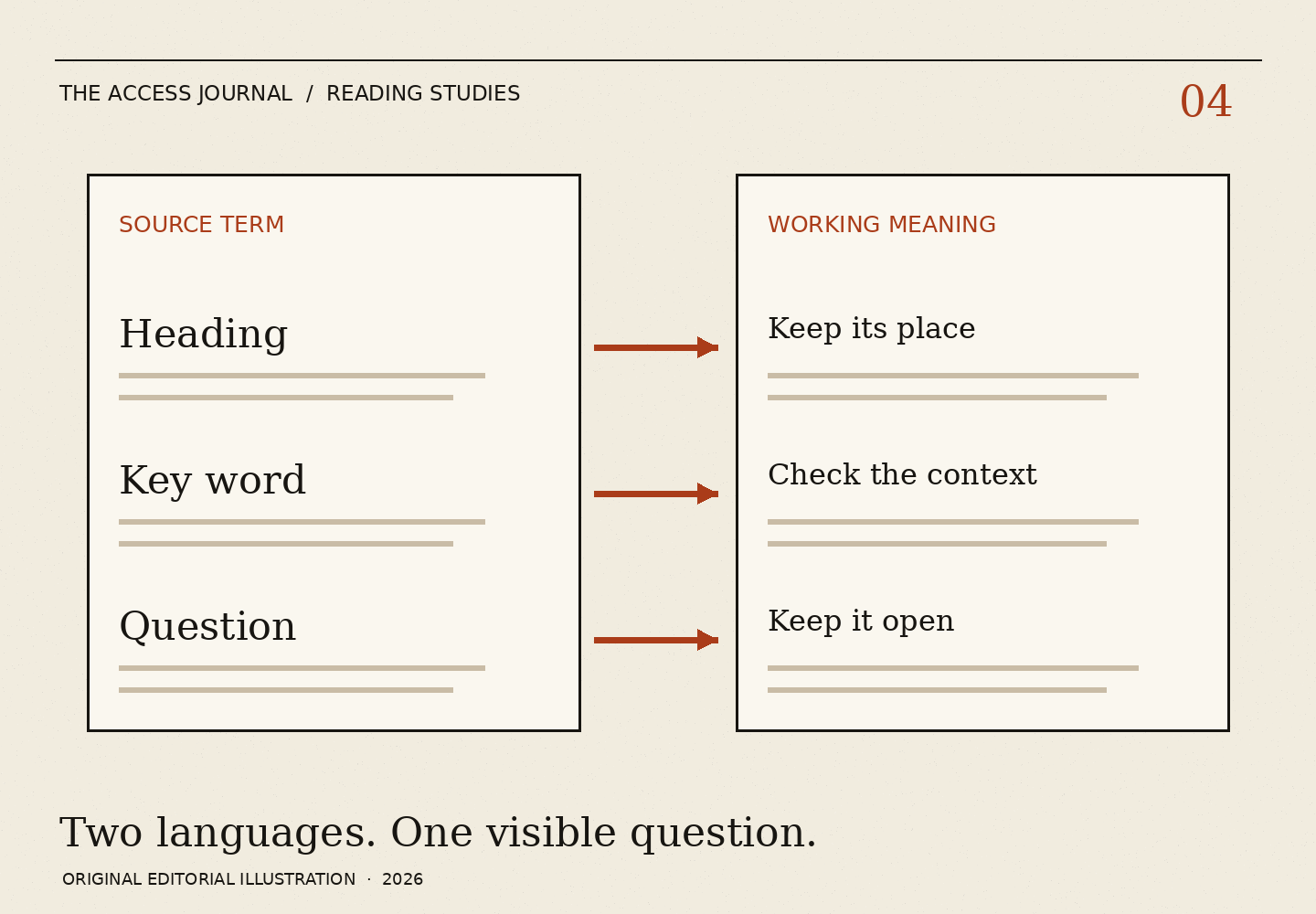
Name the task before choosing the help Translation can mean finding an ordinary equivalent for a word, explaining a sentence, translating a complete document or interpreting a conversation. These tasks have different demands. A bilingual friend who can discuss an everyday phrase may not be the right person to interpret technical conditions or an important decision.
Write the purpose in ordinary words: “I need to understand which paragraph this reference points to,” or “I need to ask whether this term has a special definition.” A bounded task makes it easier to decide what help is appropriate. It also keeps the conversation from expanding into private account details that are irrelevant to the reading question.
Digital.gov’s audience guidance emphasizes writing for the intended reader. That principle does not make a short translation authoritative. The practical method here is to preserve the question and its source, then inspect where meaning remains uncertain.
Keep a three-part working note Use three labels: original term, proposed meaning and question. The original can be a short non-sensitive phrase. The proposed meaning should be clearly attributed to a glossary, helper or your own understanding. The question records what the explanation has not settled.
For an invented example, a guide uses the phrase “request review.” A helper suggests an everyday equivalent that could mean either “ask for a review” or “the review of a request.” Instead of choosing one, the reader records both possibilities and asks which action the sentence describes. The ambiguity belongs to the phrase in context, not to the reader’s character.
If the document has a definition section, use it before assuming that an ordinary translation applies. A familiar term can have a specific meaning within one document. Preserve that term in the note so you can find it again even if the explanatory language is different.
Use glossaries for their actual job The CFPB’s March 2024 Spanish-English financial glossary provides a dated reference for translated terminology. The glossary is a language resource, not a promise of a provider’s language coverage or a translation of your program materials. A glossary can help compare terms, but it does not translate the conditions around them automatically.
When using any glossary, note its subject and date. A housing term, an educational definition and a prepaid-program definition may overlap without being interchangeable. Look for examples and surrounding usage. If the reference gives several possible translations, do not erase the alternatives simply to make the note shorter.
A useful question is, “Does this meaning fit the sentence I am reading?” A less useful shortcut is, “The dictionary gave this word, so the whole paragraph is settled.” The difference matters most when the sentence describes a choice, a condition or an obligation.
Review a machine-produced draft as a draft If you choose to use a translation feature already available to you, check what information it processes and where before using private material. This site’s tool does not translate, accept text or send content anywhere. Public practice passages are enough to learn the comparison method.
A generated translation may be fluent while changing a negative, a pronoun or a conditional word. Compare names, section references and qualifiers with the source. Ask a suitable human or the document’s author about consequential uncertainty rather than assuming a smooth sentence is reliable.
Do not silently edit the original to match the translation. Keep the versions separate. If a translated paragraph omits a reference, note the omission and return to the original location. A working translation can support preparation without becoming the document used to make an important commitment.
Prepare a question that survives the handoff A question can include the source title, the section and the exact point of uncertainty. For example: “In this paragraph, does the condition apply to both options or only the second one?” You can ask for the answer in the language or format you prefer, while confirming what help is available for that particular conversation.
If a helper asks the question for you, agree first on whether they are translating your words or adding their own explanation. Ask them to distinguish the answer from their interpretation of the answer. You should have a way to interrupt, request repetition and say that something remains unclear.
Finish with a record in a form you can use. It might contain a short explanation in your preferred language and the original term beside it. The purpose is to make the meaning easier to revisit while keeping its source and limits visible. Successful language help leaves the reader better able to ask, compare and decide.